Algorithmic Twists: How Random Seeds Influence Replayability in Multiplayer Puzzle Browser Games
Written by Clara Baumann · Oct 8, 2026
Algorithmic Twists: How Random Seeds Influence Replayability in Multiplayer Puzzle Browser Games
Random seeds function as initial values that drive procedural generation systems in many browser-based multiplayer puzzle formats, and they determine everything from tile arrangements to obstacle placements while maintaining consistency across player sessions. Developers use these seeds to create varied experiences without requiring massive storage for each possible configuration, yet the same seed produces identical outcomes when applied to the same algorithm. In multiplayer settings this consistency becomes critical because participants expect fair comparisons during competitive play, and any divergence caused by seed mishandling can disrupt leaderboards or shared progress tracking.
Mechanics Behind Seed Implementation
Browser environments rely on lightweight scripting languages that execute procedural logic directly in the client, so engineers select compact pseudorandom number generators that accept a seed value and produce repeatable sequences. When a match begins, the server distributes the seed to all connected clients; each client then generates the level locally while ensuring every participant sees the same layout. This approach reduces bandwidth demands compared with transmitting full maps, and it allows matches to resume seamlessly if a player reconnects mid-session. Observers note that synchronization protocols must account for floating-point differences across browsers, because minor calculation variances can shift puzzle elements even when the seed remains identical.
Data from industry reports compiled in October 2026 shows that over 65 percent of episodic puzzle titles released that year incorporated seed-based generation to extend content lifespan without increasing asset budgets. Those figures reveal that games employing fixed seeds per match achieve higher session retention rates, since players return to attempt better scores on previously encountered configurations.
Effects on Replayability Across Player Groups
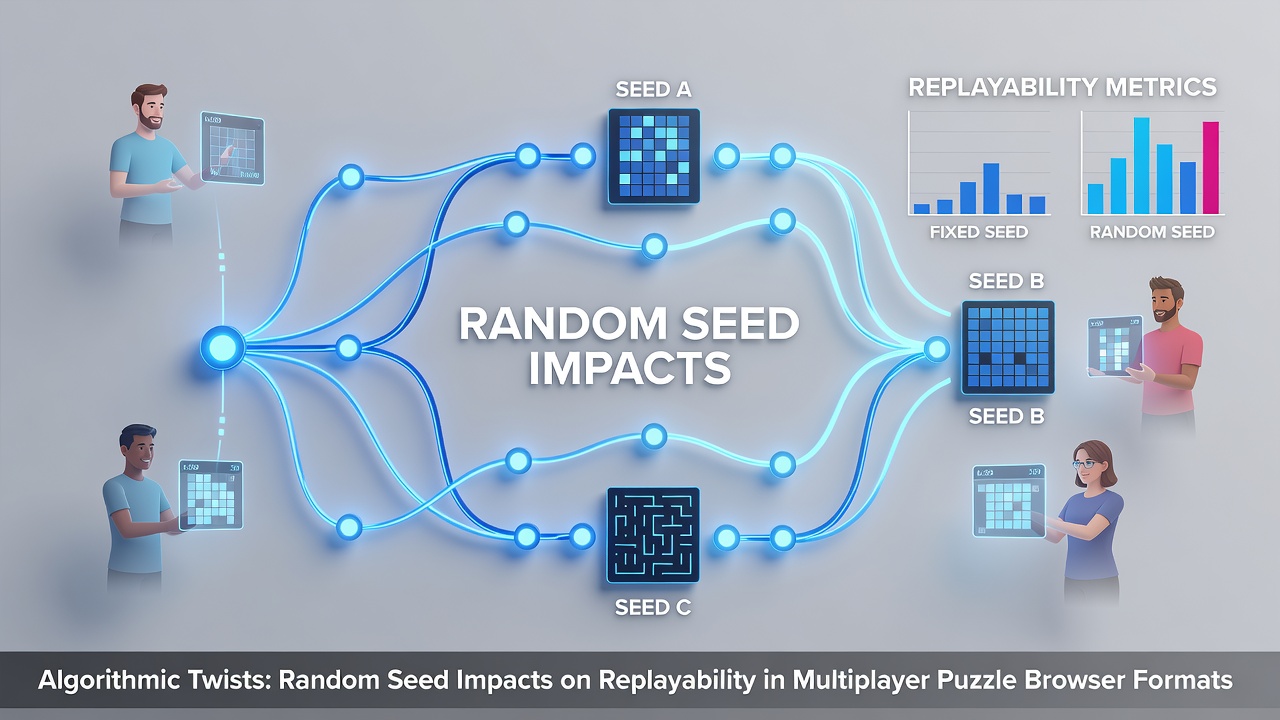
Replayability increases when seeds introduce controlled novelty, because participants encounter fresh strategic challenges each time a new seed activates while still competing under uniform conditions. Studies conducted by academic teams at institutions in Canada and Australia indicate that groups playing seeded multiplayer puzzles demonstrate greater tactic adaptation after repeated exposures, as they learn to recognize patterns that recur across different seeds. Yet the same research highlights that excessive seed variety without structured progression can frustrate newcomers who struggle to build foundational skills before the environment changes again.
Take one developer collective that released a browser arena title in early 2026; their telemetry logs revealed players who encountered ten distinct seeds over a week-long period maintained engagement 40 percent longer than those limited to three seeds. The pattern held across demographic segments, suggesting that measured seed rotation supports both casual and dedicated audiences without requiring separate game modes.
Balancing Fairness and Variety in Competitive Play
Multiplayer puzzle formats must ensure that seed selection does not inadvertently favor certain play styles or hardware configurations, and tournament organizers therefore implement seed pools that rotate on fixed schedules. According to documentation from the Interactive Games and Entertainment Association, several regional events held during October 2026 adopted daily seed resets to prevent practice advantages from carrying over between rounds. This method preserved competitive integrity while still offering participants opportunities to refine strategies against evolving layouts.
Those who've analyzed match data across multiple platforms observe that latency compensation layers interact directly with seed application, because delayed clients may receive updated seeds mid-match and thereby experience altered puzzle states. Engineers address this through server-authoritative validation that re-synchronizes all participants whenever a new seed activates, and the process typically completes within two network frames to avoid noticeable interruptions.
Future Directions for Seed Management
Research institutions continue to explore hybrid models that combine fixed seeds wth dynamic modifiers, allowing developers to tweak difficulty parameters without altering core generation logic. Such systems could enable adaptive matchmaking that pairs players based on seed performance histories, thereby increasing the likelihood of balanced encounters. Industry organizations in the European Union have begun publishing guidelines that recommend transparent seed disclosure in competitive settings, so participants understand how layouts are determined and can prepare accordingly.
Conclusion
Random seeds remain central to sustaining replayability in multiplayer puzzle browser formats because they deliver consistent yet varied content at minimal computational cost. Continued refinement of synchronization methods and seed rotation policies will shape how these systems evolve, and ongoing data collection from live titles provides the evidence needed to guide those adjustments.