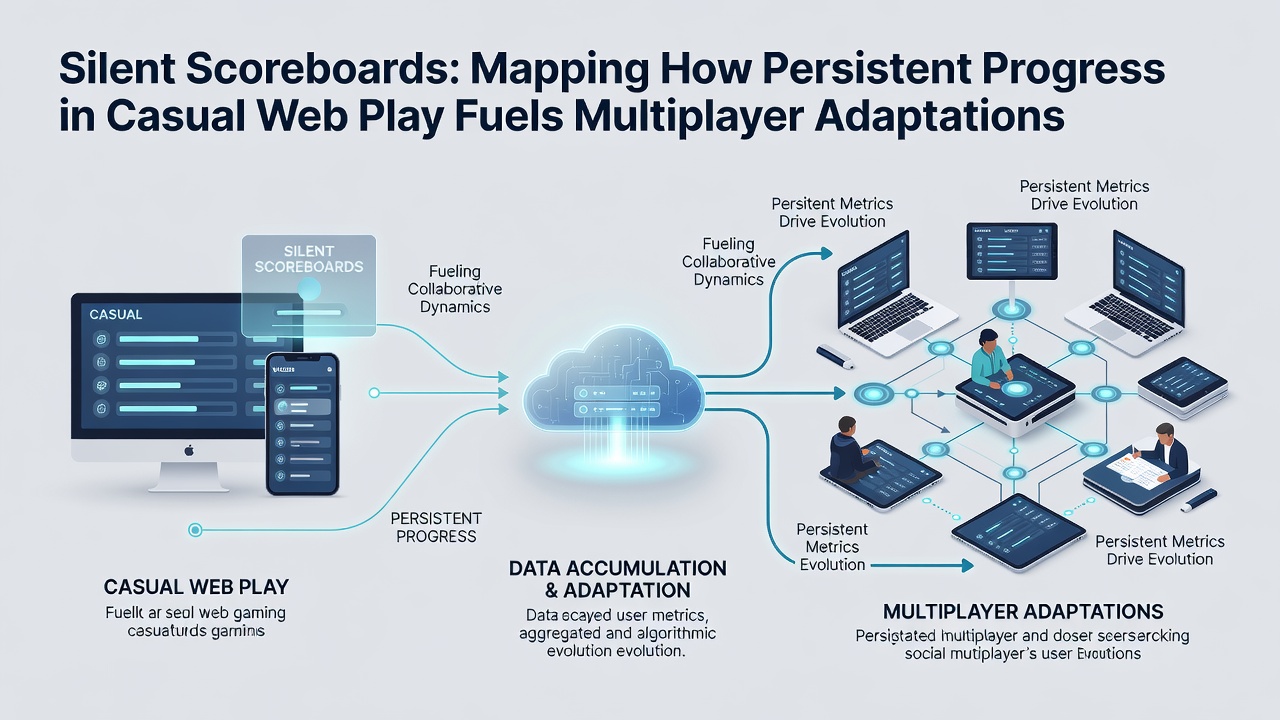
Silent Scoreboards: Mapping How Persistent Progress in Casual Web Play Fuels Multiplayer Adaptations Across Puzzle and Arcade Formats
Written by Harper Wolf · Oct 22, 2026
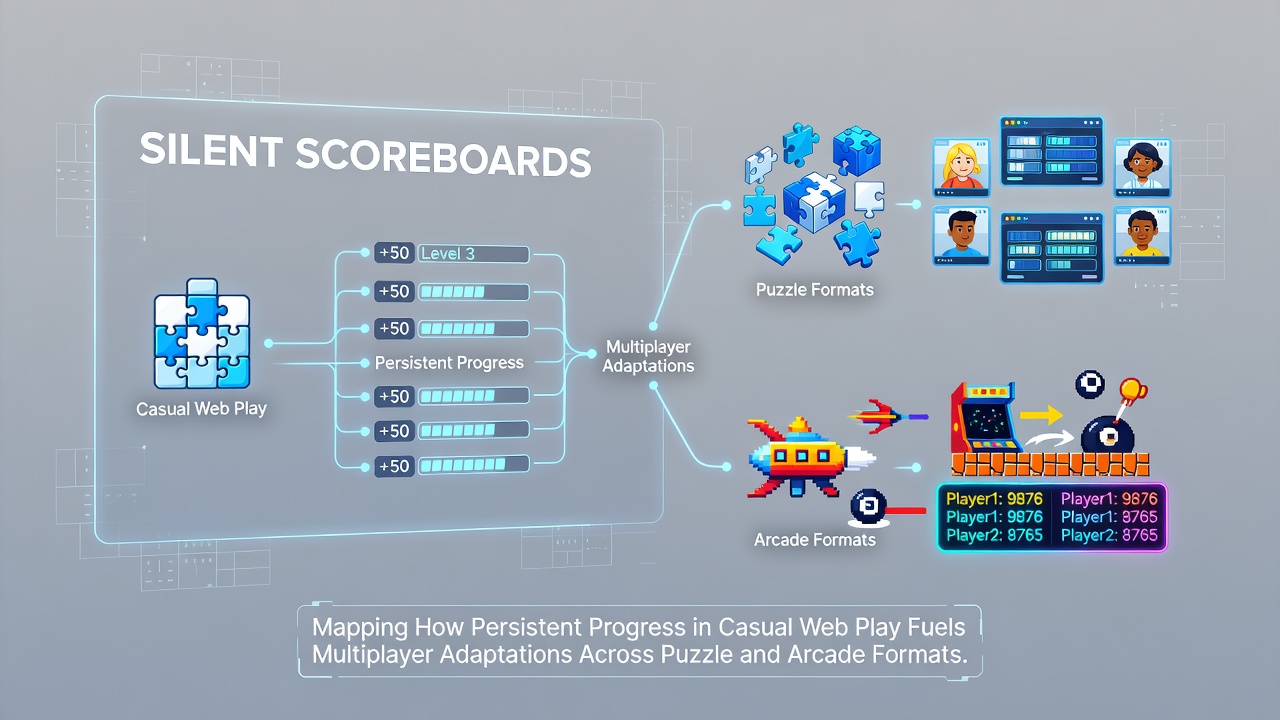
Silent Scoreboards: Mapping How Persistent Progress in Casual Web Play Fuels Multiplayer Adaptations Across Puzzle and Arcade Formats
Persistent progress systems in casual web games track player achievements across sessions without requiring accounts in many cases, and these mechanics now inform the structure of multiplayer puzzle and arcade adaptations that emerged in 2025 and 2026. Data collected from individual play patterns reveals how users advance through levels or accumulate scores, and developers apply those patterns when building shared environments where multiple participants compete or cooperate on similar tasks.
Research from the Entertainment Software Association indicates that browser-based puzzle titles saw a 34 percent increase in session retention when progress carried over between visits, while arcade-style games recorded comparable gains in repeat engagement metrics. These figures, drawn from industry surveys conducted through mid-2026, highlight a shift where single-player data directly shapes the rulesets and reward structures used in group formats.
Tracking Individual Advancement in Web Environments
Browser games often store progress through local storage or server-side flags that record completed stages, high scores, and unlocked elements, and observers note that these silent scoreboards operate without fanfare yet create measurable continuity for players. In puzzle formats, completion rates for early levels frequently predict how quickly participants tackle later challenges when those same mechanics appear in multiplayer versions, whereas arcade adaptations tend to convert solo scoring streaks into competitive leaderboards that update in real time.
Studies compiled by the European Games Developer Federation show that titles incorporating persistent elements experienced lower drop-off rates during October 2026 compared with earlier periods, and the data points to steady growth in cross-format experimentation among developers working on both puzzle and action-oriented experiences.
Transferring Progress Data into Multiplayer Puzzle Designs
Developers examine solo puzzle completion sequences to determine optimal group puzzle difficulty curves, and this analysis leads to adaptations where shared boards reflect individual mastery levels by adjusting starting positions or available tools based on prior performance. One documented case involved a match-three variant that used aggregate session data to seed multiplayer rounds with pre-progressed elements, resulting in faster entry into strategic phases for returning participants.
Academic reports from institutions tracking digital entertainment patterns confirm that such mappings reduce the learning curve when players transition from solitary sessions to collaborative or competitive ones, while maintaining the core loop of incremental advancement that casual audiences expect.
Adapting Arcade Scoring Systems for Group Play
Arcade web titles traditionally emphasize short, repeatable challenges with accumulating point totals, and persistent tracking allows those totals to influence multiplayer lobby compositions or power-up distributions. Researchers have observed that high-performing solo players often receive seeding advantages in group arenas, which in turn encourages continued individual practice as a pathway into social formats.
Figures released by the Interactive Games and Mobile Association of Australia during late 2026 demonstrate parallel growth in both puzzle and arcade browser segments, with persistent progress cited as a contributing factor in the expansion of hybrid multiplayer features across regions.
Patterns Observed Across Formats and Platforms
Cross-device synchronization extends the reach of these silent scoreboards, allowing progress initiated on desktop browsers to carry into mobile sessions that later feed back into multiplayer adaptations. Those who study engagement metrics report that puzzle adaptations benefit from slower, methodical data accumulation, whereas arcade formats leverage rapid score spikes to generate immediate competitive tension when players enter shared spaces.
Industry analyses further indicate that October 2026 marked a period of increased integration between single-player persistence layers and real-time group mechanics, driven by the availability of lightweight server frameworks that handle incremental state updates without disrupting casual play rhythms.
Conclusion
The mapping of persistent progress from casual web play into multiplayer puzzle and arcade adaptations continues to evolve through data-driven design choices that prioritize continuity and measurable advancement. External reports from organizations such as the Entertainment Software Association and the European Games Developer Federation provide ongoing benchmarks that illustrate how individual session patterns translate into group experiences, and these connections sustain engagement across browser-based formats into subsequent development cycles.